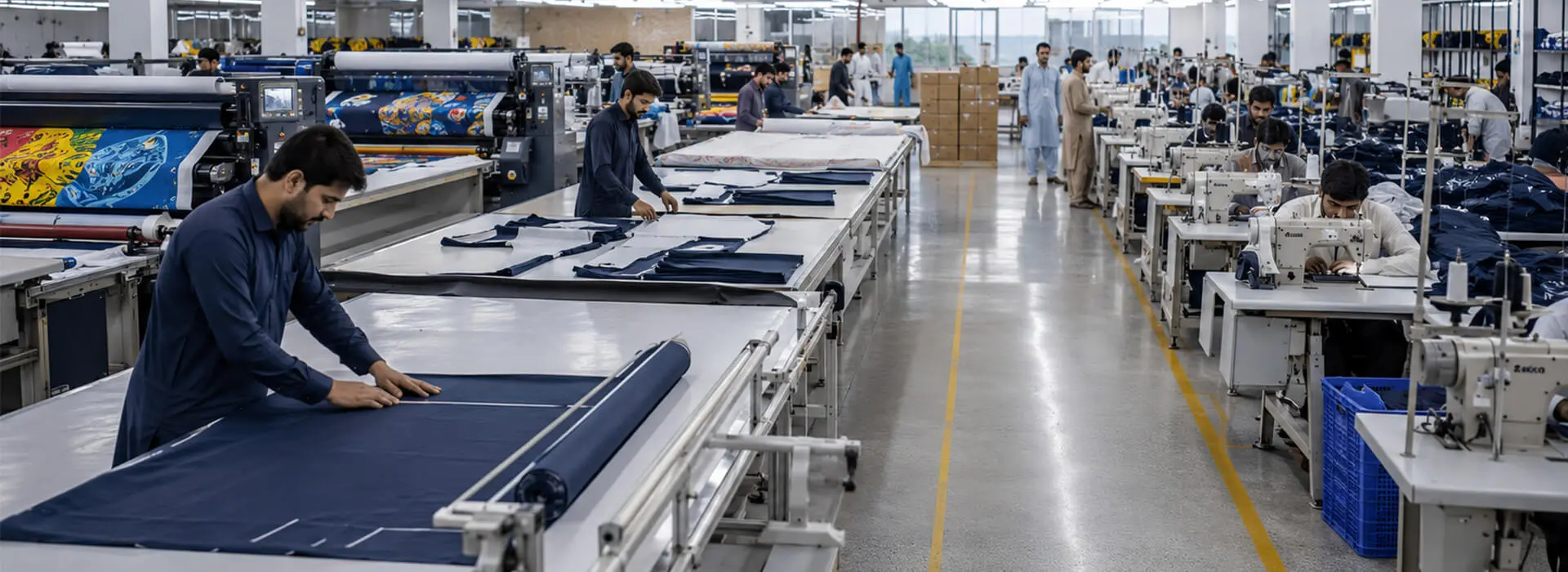
Many sportswear brands struggle with the same problem: production looks smooth in the beginning, but as order volumes increase, delays, inconsistent quality, and communication problems start appearing.
In many cases, the issue is not the product design or the brand itself; it is choosing a manufacturing partner that cannot scale properly.
Many new brands only focus on pricing, but experienced brands know that consistency, scalability, production control, and quality standards matter far more in the long run.
The reality is that not every sportswear factory operates the same way.
Some manufacturers handle everything in-house, while others outsource critical processes like sublimation printing or fabric sourcing. Understanding these differences can save you from major production problems later.
1. Understand Your Brand Requirements First
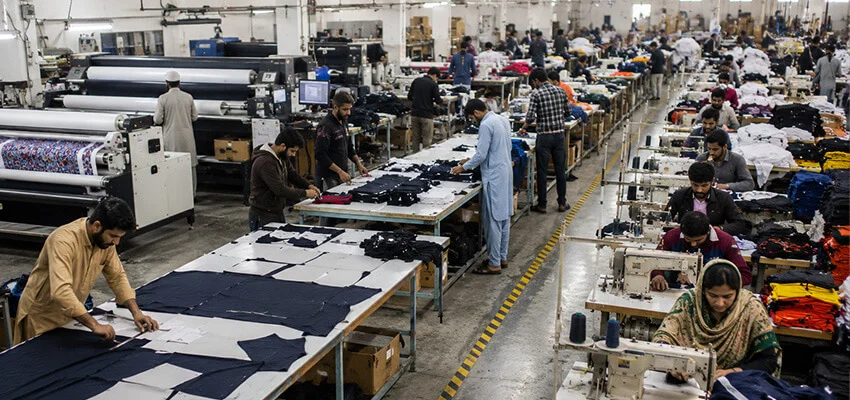
Before choosing any manufacturer, you need to understand your own business stage and production needs.
A new brand and an established brand require completely different manufacturing setups.
If you are a startup brand, you may not need a massive factory immediately. A smaller manufacturer can work well, provided they are organized, reliable, and capable of growing with your business.
However, if you already have an established brand with larger monthly production requirements, you need a manufacturer that can consistently handle higher volumes without affecting quality or delivery timelines.
The key question is not just:
“Can they produce my order today?”
The real question is:
“Can they still support my brand when my production doubles or triples?”
That is where scalability becomes extremely important.

2. Check Whether Production Is Truly In-House
One of the biggest mistakes brands make is assuming every manufacturer has their own production setup.
In reality, many companies outsource important processes such as:
- Sublimation printing
- Fabric sourcing
- Cutting
- Stitching
- Finishing
Some factories only handle stitching while outsourcing sublimation to third parties. Many buyers never realize this until they face delays or quality inconsistencies.
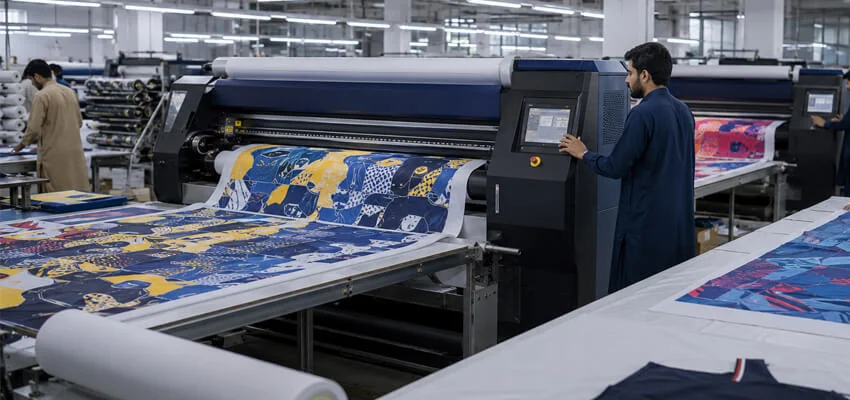
Many brands only discover these problems when they suddenly need faster production or consistent repeat orders. Delays become common because outsourced processes depend on third-party schedules, not the factory itself.
This is especially problematic during:
- urgent production runs,
- tournament deadlines,
- repeat team orders,
- or seasonal demand spikes.
If sublimation is outsourced, production flexibility becomes limited. Even a simple urgent reorder can get delayed because the factory has to wait for outside vendors to complete the printing first.
That is why you should always ask:
* Do they have their own sublimation machines?
* Is printing done in-house?
* How much production control do they actually have?
* Can they handle emergency or rush orders?
* Is printing done in-house?
* How much production control do they actually have?
* Can they handle emergency or rush orders?
A factory with complete in-house operations usually gives you better speed, control, and consistency.
3. Evaluate Fabric Quality and Fabric Development
Fabric quality is one of the biggest factors in sportswear manufacturing.
A manufacturer that simply purchases random fabric from the local market may not be able to maintain the same quality standard every time.
This happens because market fabric availability changes frequently:
- GSM levels vary
- Fabric blends change
- Texture differs
- Performance quality changes
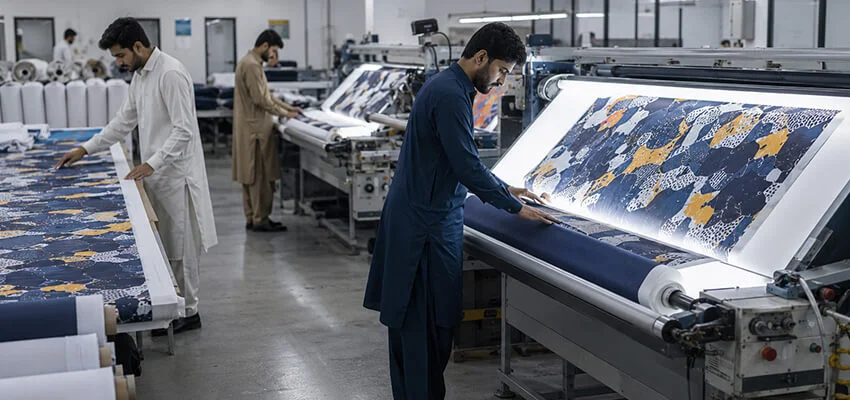
Because of this, two orders placed months apart can sometimes feel completely different even when they are supposed to be the same product.
For a serious sportswear brand, this inconsistency can damage customer trust.
A stronger manufacturer usually develops or controls their own fabric standards. This allows them to maintain:
- Consistent GSM
- Consistent texture
- Better moisture performance
- Long-term repeat quality
If your customers reorder the same jersey next year, they expect it to feel identical to the previous order.
Customers may not always understand fabric specifications, but they immediately notice when a product feels different from their previous purchase.
4. Always Test Samples Before Finalizing
Never finalize a manufacturer without testing physical samples.
Professional photos can look impressive online, but physical samples reveal the actual production quality, finishing standards, and fabric performance.
When reviewing samples, carefully check:
Fabric Quality
- Does the fabric feel premium?
- Is the GSM consistent?
- Does it feel durable?
Stitching Quality
* Are seams clean and strong?
* Does stitching open after stretching?
* Are finishing details professional?
* Does stitching open after stretching?
* Are finishing details professional?
Sublimation Quality
Not all sublimation printing is equal.
Some prints look vibrant when new but begin losing sharpness and color strength after repeated washing, which usually indicates lower sublimation quality.
Always test:
* Wash resistance
* Color durability
* Fade resistance
* Print sharpness
* Color durability
* Fade resistance
* Print sharpness
A proper wash test can reveal many hidden quality problems.
5. Analyze Production Capacity
Production capacity is another critical factor that many brands ignore.
You need to understand:
* How many pieces the factory currently produces monthly
* How many clients they already handle
* Whether they can realistically fit your production into their schedule
* How many clients they already handle
* Whether they can realistically fit your production into their schedule
For example:
If a small factory already produces 10,000 pieces monthly at full capacity, adding your orders may create delays unless they can expand further.
This is where production scalability becomes important. A factory may handle your current order size comfortably but struggle once your monthly demand increases.
A scalable manufacturer should have:
- Expansion capability
- Additional manpower options
- Flexible production systems
- Space for future growth
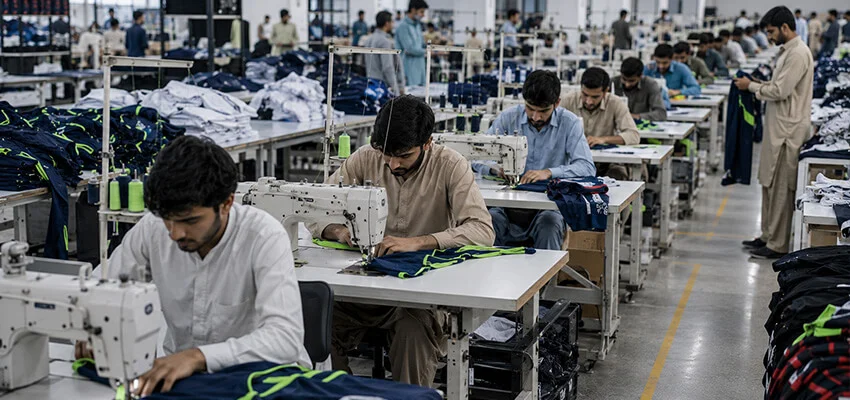
Your manufacturer should grow alongside your brand.

Example: Supporting a Startup Brand From 200 Pieces to 10,000+ Pieces Monthly
One of the brands we started working with was completely new in the market.
In the beginning, their production requirements were very small — around 200 to 300 pieces monthly across different products, including:
At that stage, they did not need a massive production setup. What they needed was a manufacturing partner that could grow with them.
Over the years, that brand expanded rapidly, and today their production exceeds 10,000 pieces per month.
During their entire growth journey, they never faced a situation where they felt their manufacturer could no longer handle their business.
As their brand scaled, we continuously expanded:
* Production capacity
* Manpower
* Machinery
* Internal systems
* Manpower
* Machinery
* Internal systems
When they needed 300 pieces, we handled it efficiently.
When they needed 10,000+ pieces, we handled it with the same level of consistency and control.
Most importantly, maintaining consistent quality during rapid scaling was one of their biggest concerns, so we gradually expanded production while keeping the same fabric and quality standards.
That consistency helped them maintain their customer trust and continue growing without production-related setbacks.
Today, they still work with us because they know their production is stable, scalable, and reliable.
6. Established Brands Should Think Long-Term
If you are already working with manufacturers and producing larger quantities monthly, your evaluation process becomes more technical.
Instead of discussing single orders, you should discuss monthly production commitments.
For example:
- 10,000 pieces monthly
- 30,000 pieces monthly
- 50,000 pieces monthly
You need to know:
* Can they handle this consistently?
* What turnaround times can they maintain?
* Can they maintain the same quality at higher volumes?
* What turnaround times can they maintain?
* Can they maintain the same quality at higher volumes?
A trial order is always recommended before shifting large production volumes.
This allows you to evaluate:
* Quality consistency
* Communication
* Delivery timelines
* Design accuracy
* Production management
* Communication
* Delivery timelines
* Design accuracy
* Production management
Example: Helping an Established 30-Year-Old Brand Solve Production Problems
Another example involves a well-established sportswear brand that had already been operating in the market for nearly 30 years.
At the time, they were working with another manufacturer who was managing around 5,000 to 6,000 pieces monthly.
The problem started when the brand began receiving larger orders from bigger clients.
Their existing manufacturer could no longer efficiently handle the increased production demand.
As production pressure increased:
* Delays started happening
* Production management became difficult
* Client satisfaction started dropping
* The brand risked damaging long-term customer relationships
* Production management became difficult
* Client satisfaction started dropping
* The brand risked damaging long-term customer relationships
That is when they approached us.
They asked many of the same questions discussed earlier in this article:
* Can production scale quickly?
* Can urgent orders be handled?
* Is there enough manpower?
* Are systems already in place for growth?
* Can quality remain consistent during expansion?
* Can urgent orders be handled?
* Is there enough manpower?
* Are systems already in place for growth?
* Can quality remain consistent during expansion?
We provided clear solutions and showed them exactly how we would handle their production challenges.
The transition required production restructuring and tighter scheduling initially, but within the first month most of the major bottlenecks were resolved.
One of the reasons we were able to support them efficiently is because we always maintain:
* Additional manpower availability
* Backup production planning
* Scalable production systems
* Extra machine capacity for high-demand periods
* Backup production planning
* Scalable production systems
* Extra machine capacity for high-demand periods
This preparation allows us to respond quickly whenever production demand suddenly increases.
For established brands, this level of manufacturing readiness is extremely important because delays and inconsistency can directly affect long-term business relationships.
7. Design Support and Replication Accuracy Matter
Another overlooked factor is design capability.
Your manufacturer should be able to:
* Prepare designs professionally
* Replicate existing designs accurately
* Maintain consistent sizing and color matching
* Handle revisions quickly
* Replicate existing designs accurately
* Maintain consistent sizing and color matching
* Handle revisions quickly
This becomes even more important when working with multiple manufacturers.
If different factories produce different quality levels, your brand consistency suffers.
The ideal situation is finding a manufacturer capable of maintaining the same quality standard across every order.
8. Why Scalability Is Essential
Production demand is never constant.
One month you may need:
* 5,000 pieces
The next month:
* 10,000 pieces
A reliable manufacturer should already have organized production systems, trained manpower, and enough operational flexibility to increase output without creating quality issues.
This flexibility becomes extremely valuable during:
* Seasonal demand spikes
* Tournament seasons
* Teamwear deadlines
* Rush brand launches
* Tournament seasons
* Teamwear deadlines
* Rush brand launches
Even when a manufacturer looks promising initially, there are still several warning signs brands should pay close attention to before committing to long-term production.
Warning Signs to Watch For
- Unrealistically low pricing
- No clear production timeline
- No sample testing process
- Outsourced production without transparency
- Inconsistent communication
- No clear scalability plan
9. Quality Control Is One of the Most Important Factors
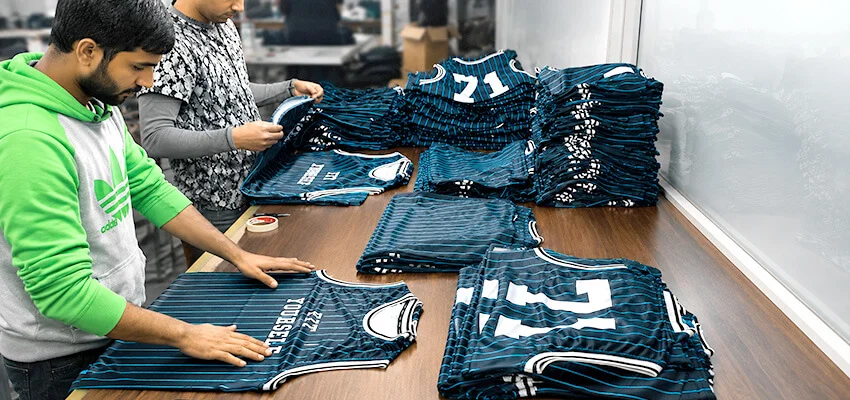
One of the biggest differences between professional manufacturers and inexperienced manufacturers is quality control.
Many brands only realize how important quality control is after they start facing customer complaints or inconsistent repeat orders.

Many small-scale manufacturers operate without any proper quality control system. In some cases, they do not even have a dedicated quality control team. They simply focus on producing garments without having structured inspection procedures in place.
But in professional sportswear manufacturing, production alone is not enough.
Quality control is what protects:
* Your product consistency
* Your customer satisfaction
* Your brand reputation
* Your repeat business
* Your customer satisfaction
* Your brand reputation
* Your repeat business
Every serious manufacturer — whether small or large — should have the capability to properly inspect and verify production at every stage.
Fabric Inspection Matters More Than Most Brands Realize
Fabric consistency is critical in sportswear production.
A manufacturer should be able to:
* Verify GSM accuracy
* Check fabric consistency
* Detect fabric defects
* Maintain approved quality standards
* Check fabric consistency
* Detect fabric defects
* Maintain approved quality standards
The problem with market-purchased fabric is inconsistency.
For example:
A standard sports jersey may originally be produced using 145 GSM interlock fabric, which provides a balanced feel, weight, and performance standard.
However, when manufacturers continuously source fabric from the open market, the same fabric may not always be available.
One production batch may use:
* 130 GSM fabric
The next batch may use:
* 160 GSM fabric
Even if both fabrics look similar visually, the final products will feel completely different.
The weight, comfort, durability, and overall customer experience change significantly.
This creates inconsistency within your brand, which is a major problem for repeat customers.
That is why proper fabric inspection and controlled fabric standards are extremely important.
Stitching Inspection Is Equally Important
Even modern production machines can occasionally miss stitches during manufacturing.
Without proper inspection, issues like these can easily pass into final production:
* Open seams
* Missing stitches
* Weak joining points
* Uneven finishing
* Missing stitches
* Weak joining points
* Uneven finishing
A professional manufacturer should have stitching inspection processes to ensure every garment meets the required construction standard before packing.
Because even a small stitching issue can lead to:
* Customer complaints
* Product returns
* Damaged brand trust
* Product returns
* Damaged brand trust
Printing and Sublimation Accuracy Must Be Verified
Printing quality is another area where quality control becomes essential.
Manufacturers should verify:
* Print sharpness
* Color accuracy
* Sublimation consistency
* Spotting or printing defects
* Missing print areas
* Color accuracy
* Sublimation consistency
* Spotting or printing defects
* Missing print areas
A common issue in poor-quality production is that approved colors do not match the final production output.
Sometimes:
* Colors appear dull
* Shades change
* Printing contains spots or gaps
* Parts of the print may be missing completely
* Shades change
* Printing contains spots or gaps
* Parts of the print may be missing completely
A professional manufacturer should always compare final production against approved artwork and color references before bulk dispatch.
Name and Number Verification Is Critical in Sportswear
Sportswear production includes another important challenge:
Name and number accuracy.
This is especially important for:
One of the most common production mistakes is:
* The front number being different from the back number
* Incorrect player names
* Wrong sizing labels
* Incorrect customization placements
* Incorrect player names
* Wrong sizing labels
* Incorrect customization placements
These mistakes usually happen during high-volume production if there is no final inspection process.
And once the jersey is fully produced, the entire piece often becomes unusable.
This creates:
* Product waste
* Financial loss
* Delays
* Customer dissatisfaction
* Financial loss
* Delays
* Customer dissatisfaction
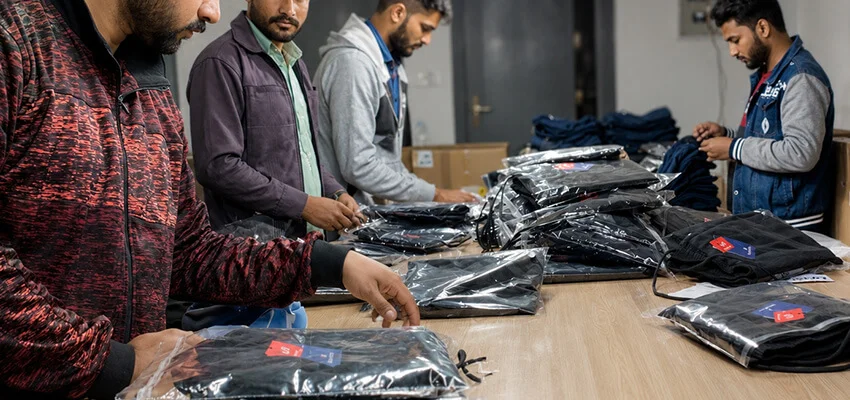
That is why the final packing inspection is extremely important.
Every jersey should be verified before shipment to ensure:
* Correct names
* Correct numbers
* Proper placements
* Accurate sizing
* Clean finishing
* Correct numbers
* Proper placements
* Accurate sizing
* Clean finishing

Why Professional Quality Control Systems Matter
A proper quality control system is not just about finding mistakes.
It is about preventing problems before they reach the customer.
Strong manufacturers usually implement inspections at multiple stages:
- Fabric inspection
- Cutting inspection
- Printing verification
- Stitching inspection
- Final packing inspection
This layered process helps maintain consistency even during large-scale production.
Because in sportswear manufacturing, quality is not defined by how good one sample looks.
Real quality is measured by whether the manufacturer can consistently deliver the same standard across every order, every month, and every year.
Final Thoughts
Choosing a sportswear manufacturer is not only about finding someone who can produce apparel cheaply.
It is about finding a long-term production partner that can provide:
* Consistent quality
* Reliable timelines
* In-house production control
* Scalability
* Strong communication
* Professional support
* Reliable timelines
* In-house production control
* Scalability
* Strong communication
* Professional support
The right manufacturer helps your brand grow smoothly. The wrong one creates delays, quality issues, customer complaints, and operational stress.
That is why careful evaluation, sample testing, and production analysis should always happen before making a final decision.
For brands planning long-term growth, working with a manufacturer that prioritizes consistency, scalability, and production control can make a major difference over time. These are some of the production standards we continuously prioritize at Foxedo Sports when working with sportswear brands worldwide.


