
Garment Construction Influences Fit, Durability & Performance
Fabric selection plays an important role in garment performance, but the way a garment is constructed often has an even greater impact on fit, comfort, durability, and long-term wearability.
Every construction decision influences how a garment fits, moves, performs, and maintains its appearance throughout its lifespan.
Construction should be based on the intended use of the product rather than appearance alone.
Sleeve construction affects mobility, fit, and overall garment appearance.
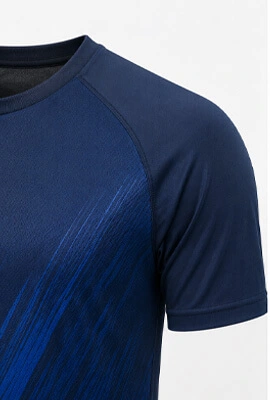
Two of the most commonly used sleeve constructions in sportswear are Raglan Sleeves and Set-In Sleeves. Both offer advantages depending on the product requirements.
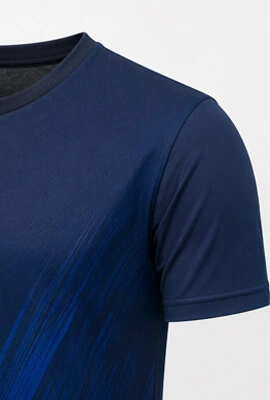
Set-In Sleeves provide a more structured fit and help maintain body proportions across a wider size range.As garment sizes increase, Set-In Sleeves often provide better shape control while still allowing comfortable movement.For many product categories, they offer a balance between mobility, fit consistency, and overall garment presentation.
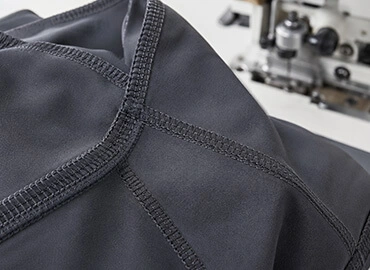
The durability of a garment depends heavily on how seams are constructed.
Seam selection should support the intended use of the product, expected stress levels, and long-term performance requirements while supporting consistent quality control standards.
Common seam considerations include:
Construction methods that perform well in lightweight training apparel may differ from those required in more demanding product categories.
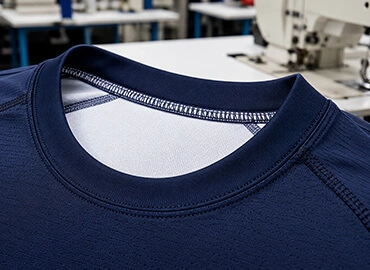
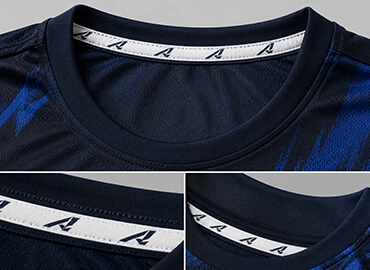
Neck construction is one of the most overlooked aspects of garment development.
A poorly constructed neckline can affect both comfort and durability regardless of fabric quality.
Construction decisions typically involve collar selection, seam finishing, and reinforcement methods designed to maintain appearance and shape retention throughout the life of the garment.
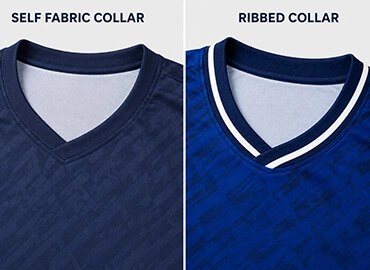
The choice between self-fabric collars and ribbed collars often depends on garment type and fabric weight.
Lightweight performance garments and sublimated apparel commonly utilize self-fabric collars to maintain design continuity and create a softer feel.
Heavier garments and higher GSM fabrics often benefit from ribbed collars, which provide improved shape retention and recovery during long-term use.
The most suitable option depends on the product rather than a single preferred construction method.
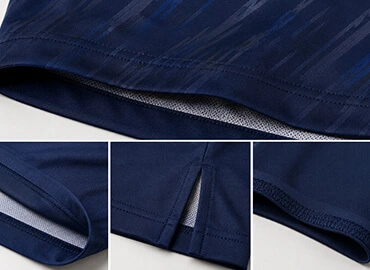
Hem construction influences both appearance and durability.
Different product categories often require different finishing methods depending on fabric weight, garment structure, and intended use.
Lightweight performance apparel commonly utilizes flexible hem constructions that maintain comfort and mobility without adding unnecessary bulk.
Heavier garments often require more structured hem construction to improve durability and maintain shape throughout repeated wear and washing.
The appropriate method depends on how the garment is expected to perform over time.
Modern sportswear frequently utilizes multiple panels to improve fit, movement, airflow, and overall garment performance.
Panels should be positioned based on functional requirements rather than appearance alone.
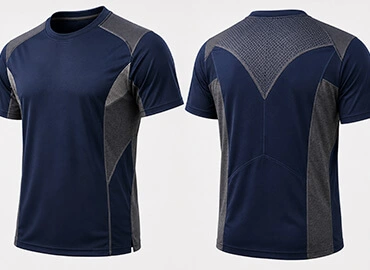
Strategic panel placement can help improve mobility, support airflow, and create a more balanced fit throughout the garment.
One construction method is not suitable for every garment.
A baseball jersey, training shirt, compression garment, corporate polo shirt, and performance hoodie may all require different construction approaches based on their intended use and fabric slection.
Construction decisions should consider:
The most effective construction method is the one that supports the intended function of the product.
Many fit, durability, and performance issues originate during product development rather than during manufacturing.
Evaluating sleeve construction, seam structure, collar selection, panel placement, and finishing methods before production begins helps improve consistency and supports better long-term product performance.
Well-executed garment construction is not simply a manufacturing step. It is part of the engineering process that determines how a product performs throughout its lifecycle.
Construction decisions influence how a garment fits, performs, and withstands long-term use. Understanding how different construction methods support different product categories helps create garments that meet both performance expectations and manufacturing requirements.
GET A QUOTE